🌳
Understanding Binary Tree Data Structures
Apr 22, 2025
Lecture Notes: Binary Tree Data Structure
Overview
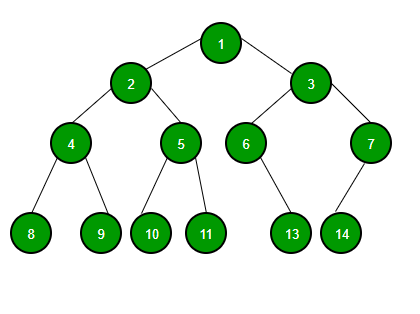
- Binary Tree: A hierarchical data structure where each node has at most two children referred to as the left child and right child.
- Applications: Used for efficient storage and retrieval of data. Supports operations like insertion, deletion, and traversal.
Introduction
- Introduction to Binary Tree: Basics of binary tree structure and importance.
- Properties of Binary Tree: Includes characteristics and relationships in the tree.
- Types of Binary Tree: Different forms and structures of binary trees.
- Applications, Advantages, and Disadvantages: Pros and cons of using binary trees.
- Binary Tree (Array implementation): Implementation details using arrays.
- Complete Binary Tree: Description and properties.
- Perfect Binary Tree: Characteristics and definition.
Basic Operations
- Tree Traversal:
- Inorder Traversal
- Preorder Traversal
- Postorder Traversal
- Level Order Tree Traversal
- Max Depth or Height: Calculating maximum depth or height.
- Insertion: Methods for adding nodes.
- Deletion: Approaches for removing nodes.
- Enumeration of Binary Trees: Counting distinct structures.
Easy Problems
- Size of a Tree: Calculating total nodes.
- Max in Tree: Finding maximum value.
- Sum Tree: Verifying if it's a sum tree.
- Identical Trees: Checking if two trees are identical.
- Mirror Tree: Checking mirror symmetry.
- Cousins in Tree: Identifying cousin nodes.
- Perfect Binary Tree: Verification of tree completeness.
- Foldable Binary Trees: Checking foldability.
- Symmetric Tree: Determining symmetry.
- Subtree with Given Sum: Locating specific subtree sum.
- Succinct Encoding: Compact representation.
- Get Level of a Node: Determining node levels.
- Check for Complete Binary Tree: Verification of completeness.
- Depth Calculation: From preorder.
More Traversals
- BFS vs DFS for Binary Tree: Comparison of traversal methods.
- Iterative Traversals: Non-recursive methods.
- Morris Traversal: Traversal without stack or recursion.
Medium Problems
- Diameter of a Binary Tree: Calculating tree's diameter.
- Duplicate Subtrees: Identifying repeated structures.
- Edge Removal: Checking tree division potential.
- Spiral Order Traversal: Special traversal form.
- Reverse Level Order Traversal: Reverse order processing.
- Tree Construction: From various traversals.
- Cloning and Conversion: Creating copies and conversions.
Hard Problems
- Min Time to Burn from Leaf: Calculating burning time.
- Preorder Modification: Adjusting tree structure.
- Specific Tree Constructions: Using various representations and sequences.
Additional Resources
- Practice Problems: Explore more problems on Trees
- Quizzes: Take quizzes on Binary Trees
- Videos: Watch tutorial videos on Trees