I was a student at Mahendra Janata Mavi. I used to go there by car. Cow dung, human excretas, I was doing all of that myself. I was doing it myself.
I was doing it with the help of the structure. It's not wrong. It's a person with a disability. This is a sinner from another generation. And this is a person who came to India to save his mother.
This is the cultural perspective. Sir, are you not a mother? No sir, only possible. What advice would you give to the government regarding policies, especially for inclusive education?
We have a lot of policies and acts to implement. We need to sensitize them and implement them. We need to make sure that the policies that are being implemented by the teachers' children and their children in government schools are implemented. Hello, district administration.
Sir, Namaskar. How are you? I'm fine. How are you? I'm perfect.
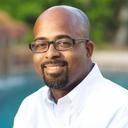
I'm always cheerful and smiling. I welcome you to Education Dialogue. Thank you so much, sir.
Thank you very much for joining the cast. It's a great pleasure. I'm really grateful.
I also want to thank you for this opportunity. Because hardly people hear about people with a disability on top of that. that more as a teacher. I have been studying for more than two decades, exactly 24 years.
But this platform, from that location, it's important. And definitely, I want to thank you first. Thank you, sir. My pleasure. I have the experience that there is no such thing.
So, I am happy to share my experience and expertise in inclusive education with you. So, what we will do is, of course, based on your experience in education for a long time, we will look at how you have seen Nepal's education from a broader perspective. In that way, we will definitely focus on inclusive education. What is the situation in Nepal now?
What should happen? We will talk about how to learn from outside the world and what we can learn. So, let's start with you, please elaborate your knowledge and presentation.
Oh, so kind of you. Thank you so much, sir. My name is Zilieshan.
I have done my first Masters in 1997, Masters in English Literature. Before that, I was a little bit in school. As a student, person with a disability, my struggle, is more than anything else, first of all, the struggle of going to school, then the struggle of college from school, and college after university. I will talk a little bit about this, and then the problems and sorrows that I faced at work, and then my studies.
That's it. That's perfect, sir. As I told you, in 1997, I studied Maths in English Literature from TU. In 1998, I applied for the SLC. I studied at Chandranikyapur Center in Rautahad.
I had 8-9 schools until I applied for the SLC. If you join a few schools, you can reach 12 schools. How so? Why? The first years, the formative age, When I was going to school, I used to go to the nursery.
Not nursery, it was not nursery in our time. It used to be from Kakhara to Tinkhaksha. That was the most difficult period for me. I studied in the same school.
Now the school is good. We have a cultural taboo. It is not wrong.
It is a sin in the past. My father was born in India. From a cultural perspective.
Sir, if I may ask you, by birth? No, sir. I was born a little later.
After 10 years. I was paralyzed. My quack doctor injected me with a drug. It was a misuse. Later, after the diagnosis, after 3 years of exorcism, exactly It took me three years to get my treatment done in the traditional way.
Later, my father sold me a lot of places for treatment. Delhi, India, and then Patna. If I go there, our conversation will end.
So I will quickly sum up and return. No problem. If there is no treatment, if my father sees that I have been treated by selling land in UNAAN ASIBIGA, I will understand. UNAAN ASIBIGA?
Yes, sir. It was around 500 to 1000 rupees per hectare. After 30 years, I was in Surlai in 1948-1949.
The places where we bought the house were all destroyed. So, when we go to a disability home, it's difficult to walk. So, my father wanted to teach my son how to walk.
But, he used to walk before. He used to walk by walking. He used to walk about 2.5 km from home.
2.5 km? Yes, about 1.5-2 km. My house was still empty before my son came to the village.
My old school, Mahendra Janata Mavi, was a school in Karmaiya. In the beginning, we used to go by car. So, cow dung, human excretas, I had to do it all by myself. I had to do it by myself, or by the structure.
And naturally, it gets better when you go to the classroom. During that period, that struggling phase, I was very sad. Might be, let's put it this way, emotional.
When the intellectual, formative age becomes difficult, when you take the taboo and sit, somehow something goes wrong and you have to migrate from there to Rautahat. In our Rautahat, and Rautahat has three classes, one, two, three classes are not taught. It's a time of struggle. In those classes, my brother, Phupu's son, from Sarlai, he came to a place called Pirari. When he came to celebrate his holiday, I was on leave for a week, but he stayed for a month.
That was my quest for learning. He worked on it a little. Before that, I was late Purnadas Manandar Sir.
That might be wrong, not Manandar, but Purnadas Sir. Manandar is Pasi. My friends used to call me Purnadas Sir.
Purnadas Sir is famous. He helped me a little. And then Kailash Dai.
He was a brilliant person. He didn't study after he got his socio-economic condition. He got me ready in three classes in a month. I went to Raigow, Ashanwa, Raigow in Rautaard in three classes. I started from there.
It took us about 2.5 km from Ashanwa to Raigow. My sister took me there. When it became difficult to go to school, my father went to Rakshol. I couldn't authenticate it. How would he know?
He saw a man wearing a crotch. He made a crotch of the tree on the roof of the house. After that, I went from 3 to 5, and then 5 to 6, and then I continued to study.
I spent 48 years in the school. In Chandranikapur, Rauta, 944 students are admitted from 18 schools. After all of them failed in English, I passed alone.
I was told to go back to my village by mastering English literature. But opportunity-wise, I was stuck here after a lot of problems. Quick question. The quest for learning, longing for learning, where did it come from? Can you recall?
It goes to the father. It goes to the father and to my brother-in-law. When I studied well in 3, I was proud of having studied well in the concept of the sin of the past. If you study well, you will learn something.
But how do you do it later? There is a path of bullying. If you study well, society will embrace the fun and be appreciative. And naturally, you will learn.
You will learn from your friends and neighbors. I was a teacher since I was five. I used to teach my sister at home.
She used to prepare food and drink and bring it home. She used to drink water. Mainly, when the water was flowing, they would put a cross behind and give water.
And the fight would be fierce. But mainly, how did it feel? It was a little easy. It was a little easy.
It would have been difficult if it was a mountain. If it was a mountain, what would have been good was the mountain's access would have been with the direct state. I would pick up the camera and put it in my pocket. I would bring my friends here. I would support my friends in Math, Science and English.
I would respect them. I would teach them well in the classroom. I would be very appreciative.
I would inspire my teacher. I would say, you are doing well. This is the biggest lesson we have learned. In Nepal, if you are a good student, it is easy to get respect and acceptance.
What does your father do? My father is a miller. I feel he is a really innovative person. When he went to Rautaot village, he used to get oil from the mill.
He used to commercialize it. Massive industrialized. He studied well and went to the management of literature.
We were four brothers. He was the only one who stopped his father's fight. We were industrialists. In the Red Band of Sarlacc, we were very close to our mill.
When my father was in business loss. What was your father's name? Rampreet Saha. We could still hear a little bit of light. The hardship during school time, if you experienced any discrimination from the teachers from the management and the fellow students of this the cooling naturally incidents If everyone is a Gokhante, then someone has to ask questions.
In our time, we had to study social studies. In social studies, the earth is like a totus. It is like a rock with a hole in it. We had read the old Puranas while studying social studies.
And when you ask questions, as really to Azurko. The bully is the kind of person who believes in religion or faith. He has done a lot of questions. I will say it again in reflection. Some people in the state still see the philosophy of I am the state.
Now, instantly, there are problems in the state. The head of the state is a little bit rammer. I can say that if we do this, we can help the cadres. If we mobilize these three, we can solve 60% of the problems of people with disabilities. I will come to this topic later.
So, that incident and in the next school, when I was questioning in the geography class, I was bullied. I should say bullied. Last time I was returning from a school in Madhesh, Australia.
I was talking about the naivety, the stupidity of the teachers. A good teacher will make a person go up and down. Look at the tone and the way.
If a teacher speaks in that way, what will be the others? So, I still have that back and forth with my words. because There were a lot of questions about connection.
Do you remember that bully or inspiration or motivation? Most of the time, hard questions came from the students. Even now, problems are still there from back in 1985. I have another question. Despite physical hardship, How was your drive?
What inspired you? My dad's businesses and his places were all lost. Later, we came to Kathmandu and started working and supporting him.
I was a farmer and I was a teacher. So, my main goal was to make my father my hero. And when I was studying for my Master's degree, of course, Arun sir, Professor Dr. Arun Gupta, and Abhisar, I call him Abhi bhai, his son Shalil, and my other friend Archana Khadka, who is now in Sikkim, and Dipendra... My friend, Deependra Regmi, who was a friend of mine, and many other friends, like Arjuna's husband, who left Kathmandu and went to Sikkim.
Deependra Sharma, who was a friend of mine, Vaishraj Koirala, who shared information about the night. He was like a jockey. He shared information about the time he was going to Australia. I will bring this part.
If I look at it this way, when I was studying for my master's degree, I started teaching in 1992. I was able to study tuition after I came to India. After I came to India, I started working in the Khetan Group. So, while I was studying, I got an assistant PA from Mohan Gopal Khetan.
He had to thank Mr. Rahendra for this. At first, there were some obstacles. But he saw that I was good at studying and had good communication skills. So, more importantly, why did Mohan Gopal Khetan...
As an honest person, I was not a good person. Journalists used to bully me a lot. When I received donations, I used to put them on my phone.
I was oriented towards screening. I used to take them home and watch them. I studied till I got into the IA. So, you have come to Kathmandu to study? Yes, I have.
I passed the IA in 1948. I came to Kathmandu because I wanted to study English. I started studying English and I got a bit of a job in IA. I started working and then I got a job in the Khetan Group. I was a telephone operator.
I was also a personal assistant. I was also working for other people. After I got home, I went to another field. I think my master's degree was in Gitarana.
He gave me a break. I went straight to teaching. Oh, you studied in Galaxy.
Yes. From the Khetan Group, I got a job at Nirmal Chainwala's company, EnjoyNepal.com. Nirmal Daulay Accidentally, they killed me. Because of their accident. Otherwise, I would have been in danger of being in the corporate house.
They introduced me like that. I left the peasant group and went to that company. In the peasant group, after the masses, I could not make space. I went to intellectuals.
And then I worked with Nirman ji. It was very good. In the small period, he had taught me that Jackie, your English is good.
He speaks and reads so well. Jacky Jacky? My district's mayor became Jacky. And Arun sir, Maya said Jacky Jacky and Arun sir said Jacky.
And Jack Derrida inspired me. I am especially going to Arun sir. Friends, mainly Jacky, I need Deepen. Right. So, Geeta ma'am introduced me in teaching.
And after that I went back. money. After I started studying, I became the vice-principal of the Excel series.
Did you work in the Excel series? Yes, I did. Geeta ma'am sent me to the Excel series school. I had a great tuning with Ms. Sheetal.
And they trained me in ULens. I had to do good work. So, when I was doing MPhil, I left the Excel series and went to college. I had to go to another question.
So, I kept looking. In 2007-2009, I did MPhil. And I applied for the online course, but I couldn't. We decided to do an MPhil in Conflict Transformation.
In MPhil, we did not just do a Conflict Transformation, but also Sociology. In 2016, we did a Master's in Sociology. We left everything behind and settled in St. Gervais and Padma Kanya College.
So, you are studying in the University of California now? Yes, I used to study in St. Gervais until I was 22. As a faculty lead in English, it's very good. I am doing my Master's in Inclusive Education. And I also went to Australia. Australia Leadership Awards.
I got the Australia Awards Scholarship in 2022 and went to Australia. It's a long experience for the landscape of Nepal's education. How do you see the film from your perspective? The question demands a great overview. I will start with positive changes and then say what is not happening.
When students reach public schools, they have the manpower. But students have to be the ones to nag the strong manpower. This is a two-way street.
When I was in Kathmandu, I saw the results of the government schools. The schools that worked well and gave better results. My daughter was in the position of the Dealey Bazaar. Padma Kanya School, in Dilli Bazar.
My friend Dipendra encouraged her to study there. She got good results. The school and Padma did well.
If I take her back to my village, to the school in Sarlai, I can see that Mahendra Janata has done well. Looking at the outside structures, I can see the inside in depth. I haven't got it yet, but it's a little near my house. My nephews and nephews have not gone to school.
They say it's broken. But the technical education is also good. It's been changed after localization.
But if you look inside, you can see that the schools are being destroyed. I'm in the second part of that sector. I think that the opportunities that we have in the public and private schools are not only good or bad, but also have a lot of quality.
If the education is paid, the students will not only get good grades, but also the results will be seen in the future. If you look at the results of the exam and the result of the setting, A particular sector is again portrayed in the media and in reality. The portrayal is of tortured, tormented and destroyed pictures. There are good and bad blendings.
Overall, in Madhes' education system, after 1992, sector-wise, Dr. Suhan Sahab's report is seen. If we look at the education system in Ghazab, there are 2-4 private schools that are doing well. I went to Siraha, and there was a good school there. It is called Siraha Sagar Matha School.
They are contributing. And according to their proposal, if you want to do public school, you can take us and the public together. That's one thing. I have summed up... From what I have seen, there are three types of education.
One is the motivation of the students, through personal relations, they sit with the professors and say, Sir, I have to do this. They guide me with pleasure. There is an intimacy, there is a tradition of the teacher. With Sridhar Sir, with Abhisar Sir and Arun Sir, when we see them, we will be shocked. I respect all the people of that generation.
But I don't think there is a generation like that. I have a lot of friends who studied linguistics. I have read many books in that field. I studied linguistics in language school. Especially in Kirtipur.
Then they come to the ISR. So, the generation after that was very committed to the student and subject. I didn't hear that much.
Did I not invite them? Sir, I got a little bit of that. Just like the students, they are looking for benefits from what I got from the city. Transaction.
I used to say that I will get max if I butter Sir. But it's not like that. Looking at Arun Sir, Abhisar Sir, Sridhar Sir, I can see the hierarchy.
Sirs will do whatever they want. You have respect. I will do it. Genuine respect. I feel happy when I see Abhisar and Arun Sir.
Because they have to learn the impact of that level in their career. Now, we see how to bring in the marks and how devoted we are. I would like to go back to your point about life learning.
I have seen in Australia that self-driven learning is very difficult to meet teachers. But they can also combine that. They have given us the idea of self-driven learning.
How long will it take? I will come to that, sir. Looking at it from the perspective of overview, to summarize it, it is a little more showy, a little more commercialized, and it is not easy to find education of different levels.
If I summarized it correctly. Now, I will talk about inclusive education. So from the point of view of your diversity, inclusion, equity, your subject matter is the same as that of Australia.
But we are getting into depth. Sir, what is inclusive education? inclusive education I didn't know much about it before I went to Australia I was a friend of my batch I had a professor in Stony Brook, Dr. Sam Sharma.
I had a very close friend there. He was also an inclusive educator. But in literature, he is working from a grassroots level.
He connected me to him in 22. Super active. I was very surprised when I heard that inclusive education was a buzzword. I was shocked when I came back. We have definitely fought for inclusion in Australia. We have fought for it for 45 years.
We are the product of the movement. We were called from the left by this party. Quickly, let's talk about inclusion.
Education is for everyone. Even if we say who is the rightful one, education is a fundamental right. The constitution has said so.
But in the case of catering, I'm willing to agree. ...the buzz word in the market, how they commodify it, how they package it. So, why is there inclusion? Because some people can't do it.
They don't have the purchasing power. They don't have the education. So, inclusion, education. Education for all, particularly for those who are marginalized.
Despite of their diversity, learning diversity, education should be for all. If you look at our constitution, 2015, the report has been mentioned a lot. I have done a research on TU, I have looked at TU's inclusive education, special education with an inclusive lens. Education for those people who don't have access, particularly persons with disabilities, and how to cater to diverse needs, in the same case. Keeping them in the same classroom, persons with disabilities, and the person who doesn't have a voice, they should be brought together and educated in a way that everyone can get along.
Otherwise, it will be tier-wise. If there is a brilliant student, they will have to plan for the lesson. I want to break it down a little bit so that our audience can understand it. One is that we need inclusion in access, right?
Yes sir. The other is in delivery, in the classroom or inside the campus. Let's break it down and see. If we talk about rhetoric, I will talk about reality.
The constitution has also guaranteed that. Many teachers said that they are inclusive and welcome everyone in their classroom. Now, when you look at the market, you will see that the class is very inclusive. That is in the rhetoric.
Not only that, but when you look at the reports of the education ministry, you will see that it is very impressive. The report says that the education system in Nepal is striding towards It's very forward, it's about meeting the 21st century. This is seen in the report.
In 2014, a professor Dr. Maudsley, Liz Maudsley, did a research. She said, is Nepali in Nepal, really inclusive education is catered? She asked this question.
Donors are doing what they want. They say that they have gone in the name of making people happy. After 2015, in 2018, our constitution came into effect.
After 2015, our constitution came into effect. Education... Clearly, by mentioning inclusive education for everyone, in the form of fundamental rights, in the classroom, in the same place, to teach, Teachers need to be sensitized before anyone else. Educate them. They require massive training.
What are the missing parts of this implementation? There is a lot of theoretical stuff. Be compassionate. If you move a little slowly... If you were to ask a student, why don't you come to school?
What would you say? Why don't teachers have a clear mind? Why don't they sit in a comfortable position? You can't do that. My students tell me, even in my age, my children are of the same age, they call me uncle.
They have memories, memories, they sit in between the teacher and the student. That is the problem. The path of the current generation of teachers is being missed.
So, in the implementation and rhetoric, what do you say? I have another question for you. There is a lot of confusion. I think the conversation in Nepal has been very calm. I think about diversity, inclusion, equity.
How many dimensions of diversity are there? What is diversity in terms of? When I was included, I didn't know who was there.
Sir, we are blending a little bit in this. Inclusion per se, right? Professor Dr. Graham Green, a professor from Queensland, he said that inclusive education in the 21st century, according to him, inclusive education is not only education for all the people, but unapologetically people with a disability.
Inclusion, for us, inclusion is... marginalized, subaltern, voiceless, and the other types of people, when you put them all in a basket of inclusiveness, it becomes a mix-match. According to him, there are three types of disabilities in persons with disabilities.
If we look at the autism spectrum alone, there are 13 categories. Altogether, 13 types of students with disabilities or persons with disabilities are found. All of them, In the past, special education was not allowed to teach.
They had to leave the school, like they did for the blind. But visually impaired schools, which used to be called blind schools, have now become visually impaired. Language has changed. The deaf students, who are considered impaired students, have been taught sign language, Braille, and so on. If they are left in the same place, If they are kept in special classrooms, they become isolated.
They are not able to communicate with others. So, interaction with others is limited. Yes, it is limited.
Historically, people with disabilities have been completely neglected since 1800. Whether it's in Christianity, in our Hindu religion, it's still a heavy burden. There are conversations about the people who are suffering. But now, when you look at the changes in the conversation, people are saying that they are just doing what they want to do.
If they had a conversation with the people of the Haji Rama, they would have repeated it. That is another part. But our generation has accepted this from the religious perspective. Then came the human rights issue.
And then came the social movement. Historically, they were terminated by the 1800s. Then a French philosopher, a doctor, a person, a wild boy of every, in 1800s, he was not wild actually, he was pacified and educated. When you look at it one by one, you can see that it can be taught.
When you look at it as a model, you can see that it can be taught. Then mainly in the Enlightenment period, like John Locke and Rousseau, these philosophers localized education as inherent quality. When it came to reasoning, from a religious perspective, in the reasoning Enlightenment period, education was given to them. And when you think about it philosophically, What is happening when we are sending disabled people to a different school? That period was until the 19th century.
In the early 20th century, veterans of World War II, many of them were imputed, destroyed, and limped. The disability movement started in the 1970s. So, people who fought in the war, started fighting for the nation.
So, even if you shorten the long history, after the human rights came, in America, there is an idea called IDEA. This is an act for inclusive education. IDEA, full form.
That was in 1975-76. And when a person with a disability is given equal class education, We need to provide equal education, not just one. Because they are not isolated.
And if they get a good opportunity, they will contribute to society. They will lead. Why? Because veterans had returned.
And these exemplary war fighters can change the mentality of, I cannot do, and they can change it. If they blend it and sit in one place, they will not be isolated. It's not a burden, it's an opportunity.
One person can understand another. That's the discourse. And when we look back, in the 90s, particularly in Salamanca, in Spain, when we took part in Salamanca, the discourse of inclusive education reached its peak. In 2008, CRPD signed the agreement. CRPD is not a comprehensive peace accord.
This is mentioned in the Human Rights Act. It's about human rights. So, after that is mentioned, and the activism of people. In the context of Nepal, it was not possible to fight against the voice of human rights children and persons with disabilities. In 2018-19, TU introduced special education.
Special needs education. Special needs education. bachelor summer month They have removed the course and have gone to the masters and have called it inclusive education.
To some extent, it has not become completely inclusive. The curriculum of special needs education has been made from the tagline of inclusive education. But LUPIC, Norway's university, is working together with a project of Norway, Trivandum University Education Department, to make it inclusive.
Before that, your Sangon University, Korea's University, California University has been tie-up, TU has been tie-up, and your Provencal University has been tie-up. So, what we will see is that inclusive education is in the evolving process. If you improve the form of special education and first leave it and study, you can get out of the segregated form.
How can we include human resources in the same place? In the context of Nepal, people who study inclusive education should be made teachers. There are many human resources that are needed by NGOs and INGOs.
and the resources that the education minister needs. Even if we make more, more than what you have now, TU, KU, There are new courses in KU. The first one is inclusive education. It has been started in the morning. This time, there is a new course.
It is being implemented in the masters. I will teach it. What we can see from inclusive education, from the bottom to the top, is that we can remove other things and prepare human resources. And the inclusive education trainer that I am in the market, Banei Arood Many people have studied and have gone to school and have taken training. But some people are not like that.
I have said that don't go to the classroom. If any trainer... If you say you are a trainer of inclusive education, please correct them.
Talk to the students, meet them, empathize with them, how difficult it is, be with them. Take steps and see. You may not understand their pain and suffering, but you can take it as a lesson from observation. You have to have a conversation.
Conversation. I have to keep myself in touch with them and see how they are doing. I have to keep track of their activities.
I have to ask them what the expectations are. Be compassionate towards them. It's not that one-layer.
They say, I have this and that. And I have to say something funny about you. Teachers tell me, I will go to Kathmandu University and study in the fourth grade.
They would have loved to say, you are so difficult. The answer I would have given is, I am difficult, that is always the case. What is difficult now is, I have a job, I will study it.
Let me work first. TU has not been made yet. I applied for Norhead, I entered the project.
And it becomes a disability friendly toilet. Oh man, lower the class on the fourth floor, the problem will be solved. KU will go through the process of doing it later. Now, the person with a disability, if they are qualified to come and study, they can do it together.
If they don't have to go, they can go and learn. If it goes from a compassionate nature, a cooperative way, it will be implemented. From now on, it will be just rhetoric.
In reality, it will be completely destroyed. Another thing that I really like, I would like to bring you back to the classroom. Yes sir. So, what is inclusive methodology?
Sir, before everything, for personal inclusive education, what was the need of the student? What we missed? Individual students. Yes sir, individual way back.
If that is the case, then the student should be taken in the same way, different method butter diversify and cater to the needs of the students. Can you give an example? I think universal design is something like that.
You mentioned IDP, UDL, Universal Learning Design. What does it do? To simplify it, I will tell the students that we don't have the material. When you prepare the topic for your students, Softship, we love.
The lesson planning that I do, I need to increase the engagement of the students in that planning. Exactly. You can say, 5-10 minutes before, you read this topic. The classroom that we teach, 45 minutes to 2 hours class, in that, 10 minutes, we give instruction, listening to the students.
Today, we are going to do this much. First, in the first part, you read this much, and you can engage the students by saying, what do you understand? Let's go to an example. And then, the students who are behind in their studies, they are given a small-scale method. In that, they can keep their peer-wise, they can keep a brilliant student, and if there is another weak student, they can keep him and motivate him, inspire him.
There is no technology or access to that. I will repeat it again. What we don't have is what we have. What we have is what we have.
What we have is what we have. One of my friends, or brother, or friend, Mahesh Ghimre, he has studied in Australia. He says, the easiest thing is that our teachers can modify it a little bit.
They can take the idea of the fly into a teaching material. And they can take it as an example. It's so good.
So, I said it's a one-off. Instead of using the universal learning design method, it's for the demand of students. Gatter it, divide it, right?
And then bring it back. Now, when it comes to using technology, there are always smart people. You have to prepare the students today.
Not you, you, you, you, you. Right? When you do it with fun, they will say, come on, do it with us.
Come on, you and I, let's do it together. That is also a common thing. But generally, you are the one who says it.
So, that was the time. When I was studying at St. Joseph's, there were four visually impaired students. They were not able to see the PPT methods prepared for them. One student would come and support another student.
They could even talk after class. That was also a design difference. Another IDP difference is what a particular student has been looking for.
It can be combined with the simplified version and your assessment. One examination is of 3 hours and in 3 hours, it is not necessary to write one question of the same format. Exactly.
I have a very good education. I also look at it critically. What I think about summarizing is that we should not consider this unique problem.
We are giving universal solutions without much understanding what individual student needs are. We are giving all the information that we can get from the students. That's none of my business. Generally, it is like that.
Generally, it is like that. I will add one thing here. Recently, I had given my students an assignment from 10. Go to Kalimati Bazar, visit it. Kalimati Bazar, go there, visit, have conversation with these people. Why is the amount of shopping fluctuating so much?
If we do that locally, we will be able to teach critical thinking to the people who face problems every day. Look, first of all, ask questions. You should not be afraid to ask questions to the state, ask questions to parents, teachers, but not everyone. Why did this happen?
Engage, curiosity, increase that. Inclusion is the same. Come, let's talk together.
How much does what I have learned contribute to my life? Is it only theoretical? Like, it is covered in the degree-wise.
What is its practicality? What I am going to say in the coming days is that, especially in the middle school sector, I am also going there. I am not going there, I have to go there. I am looking for a medium. I have been trying to teach my daughter till 12, but I couldn't.
Oh, my! A student's daughter will study after 12. That doesn't work. I am not openly saying this, but I am saying this from your point of view. I have a good son up to 12 years old.
I have supported him to study. The rest of the students who study medicine, they get names in scholarships. They don't have to sell their houses.
Recently, there was a case where a POKHAREL's PA took 38 lakh rupees from a Chaudhary's daughter and gave her name in medicine. What I saw was that the person who gave 38 lakh rupees to my daughter's name was a criminal himself. If I take your daughter's name, 38 lakhs or 40 lakhs, the system, the corruption that is there structurally, the reflection of that corruption is in the classroom, right sir? What do you mean, sir?
As I say to you, some people in government colleges, like I studied in PK for 9 years and I didn't know, or the contract was not signed, one of the factors in many of the countries is that I don't have a push factor. I am not the kind of person to say that I am a comrade, a friend, a brother. Psychophantias who want to improve Nepal's academia, they try to depoliticize it. When I look at it, I think of the reflection in the classroom. If a comrade or brother or sister has given me a job, I would have been a student.
In the end, the students who harm the students harm the Singapore nation. So, when I see, particularly when I give it to parents, don't be shocked by the fact that they have paid your children's fees and put them in a good school. Go inside and visit, try. I have recently given examples, I will go there later, I have to find out myself. And don't be shocked.
Some people say that they have not studied, 8th, 9th, 3rd grade students, I don't know that, I have not studied my children. more as a coach. If I were a teacher, I would never teach my children.
I would make them study. I would ask them questions. What is it?
What kind of education is going on? What is happening today? I would ask questions.
My teacher friends would say, School is like this. You have children at home. Even if you don't study, you will be asked about it.
My parents were like that. My father had gone to school for two months. He never came back. He would put his father in jail and make him study.
What will you do if you don't do this? You will never come back after two months. You have to get rid of that hatred. At that time, there was a talk of making him study. Now, there is no such thing.
Here, it is about making him go around and do something. The second thing is the engagement of parents. I am living abroad and I am keeping my daughter and son in good boarding school. I am studying in Gajap. Recently, there is a Gajap school in Plastubha.
It is in massive demand. The child has to pay Rs.5.5 lakhs to study for two years. I will reach the college.
I will go from the 8th floor to the 7th floor. And after a while, I will meet an student. He has taken a horse. complete garna like sauce and mcgurr sushi so hey what happened get up with our di where the budget Connie the basic one email hey don't worry I used to teach in this college when I look at sir but I rely The children of the volatile age who are studying in 11-12, from the fear of being done, only by completing the course, our nation does not have the good manpower.
When it comes to St. James's, sir, it is inclusive. I studied there and now when I come back, the people are amazing. The ramps where you walk, and then...
Students with visual impairment, to climb the lift in 3D, this is disabled friendly. People made it like that. If you look at it as an example, Gajap was more than their resources, he was like father and brother. It's the mindset. Yes, and at that time, Father Augustine, he desperately wanted to bring changes in that college.
Quickly, Sir, I have been studying in Australia for 22 years in Nepal. How did you feel when you arrived in Australia after studying for 23 years? I was so excited. That was the transformative period of my life.
I should not say in my old age, but in my mid-career. I want to tell you that Australia has empowered me from the life-learning-driven way. When I was going to school, I was going to the first semester, thinking that I have to do something. you. I was released with the backhoe.
And when you go there, it's like a place where a person with a disability has been taken away. How do they manage that? Sir, there is NDIS. The government pays everything from there.
They pay taxes. Like us, they pay everything. The government not only helps the people, but also helps the cars. The car that cost 28 crores is also being sold.
The main budget is there. And we proudly say that we are one of the most impoverished countries in the world. We can go into political conversation.
But the main reason is government. The budget for education has been cut. The government has reduced the budget for education in Australia. Even if the professor doesn't meet the students instantly, there are daily conversations via email. There is an open examination system.
Three months ago, everything was in flow. They would do this assignment, and sometimes they would do that. I said, if you just take a little bit of it, it will empower students.
Sometimes, even if you don't write an exam for three hours, you have to do research for the second time. And the main thing is to modify. This is an education system of the imperial colonialist period.
Three hours, the sir comes, sir is the main source of knowledge, but now it's gone. In terms of inclusion, where do you think it comes from? From the streets, it's inclusive. From the toilets, it's disability friendly.
People are made to ride the bike. What about inside the classroom? Inside the classroom, it's accessible.
When I was there, they used to call it a mobility scooter. The students go inside the classroom. So, structure wise, forget structure. structure method We don't have a budget. It takes time.
Hey, man, even after that much, our TU... There is no such thing as a good environment. In cities, there are 2-4 toilets, which are disability friendly. They are made there. In colleges and schools too.
In terms of methodology? In terms of methodology, in Australia, it is interesting how students are engaged. In the previous class, we received an email saying, we are discussing this. The flow is the same.
They have uploaded books and they are opening weekly flow. This week, I had kept a paper of remote regional context. The class is open on the day of the lecture and the day before that.
We have to read that chapter compulsory and keep our own view. What was in this topic? So, students are reading it first.
The system is like that. That is our mission. One of my students said, Sir, we can do what we want to do in this week. That is natural. It is simple.
We are doing this next week. We will do this next week. We will do this next week.
So it depends on people. In teacher's perception. In teacher's way of dealing methods. In teacher's way of dealing methods.
on a content lie, on a... students are like say oh you're something sorry Banner a little ram ready empathize garyo money what is missing is compassion sir teachers are not the machine as you're gonna you call it for jump I jump gary also a tattoo just a proudly one Tony you Polly Amro plus two mom ponders a in text ha students are counted in terms of number And in terms of number, it's commodification. They are selling the transaction.
This much money we have earned, we have to get rid of it. It is lost. But how do we justify it?
By catering to the students. By empowering them. Life learning driven method.
I love to study. We can take it there. That is missing.
And they will empower them. Last question. Until you have anything to add. From my side, the law that has been passed is being passed in the parliament. The law that was passed earlier is also being passed.
What advice would you give to the government in policy, especially in inclusive education? Nice, brilliant question, but it's the last question. Sir, the main rules, regulations, acts, policies have been made here.
We need to sensitize and implement it. Not only that, we have a brilliant language for implementation. We have made a rhetorical report on this.
We need donors and agents to make this happen. We need them. We don't have any donors. I didn't mention them in the August. We need them to make it happen.
The stakeholders who implement this in reality are parents, teachers, guardians and civil society members not that political politically indoctrinated uh cadres early to after personal ego personal benefit like anything they are selling one second teachers are good for that sorry yeah for that government school or my leader's and it policy side implement garland nagar land to say compulsory gun person third time monitoring wise man I have empowered and localized the school. If we don't have human resources, who has them? With your help, we can build more human resources.
We have the Australian Embassy. We need as many human resources as we can. Can you help us? We have many projects through the Ministry of Education and the Department of Education. One thing I have found missing is that the condition of the school is still the same.
But if we go to a 12-year-old school and see that they have taken so many changes, and then they get a donation, it is not real. If we can practically implement real changes in reality, then this nation needs human resources. capital, human resources are being fulfilled. Thank you sir. Your inspirational life story, academic journey and life journey I was truly inspired.
Plus, your inclusive education is my honour. I would like to thank you for your time and your understanding. Sir, thank you so much for this conversation.
This could be a small part of the journey. We can have further discussion about the implementation. My last message is that you are so compassionate. Thank you so much for this opportunity. www.nepalwarts.com